

Management of surgical scars :
the role of vascular and CO2 lasers
Surgical scars can be a source of aesthetic concern for many people. Fortunately, technological advances in dermatology now offer effective solutions to reduce their appearance. Among the most innovative treatments, the vascular laser and the CO2 laser stand out for their ability to reshape the skin and improve scar quality. In this article, we explore these two techniques, their indications, benefits and what to expect during a session.
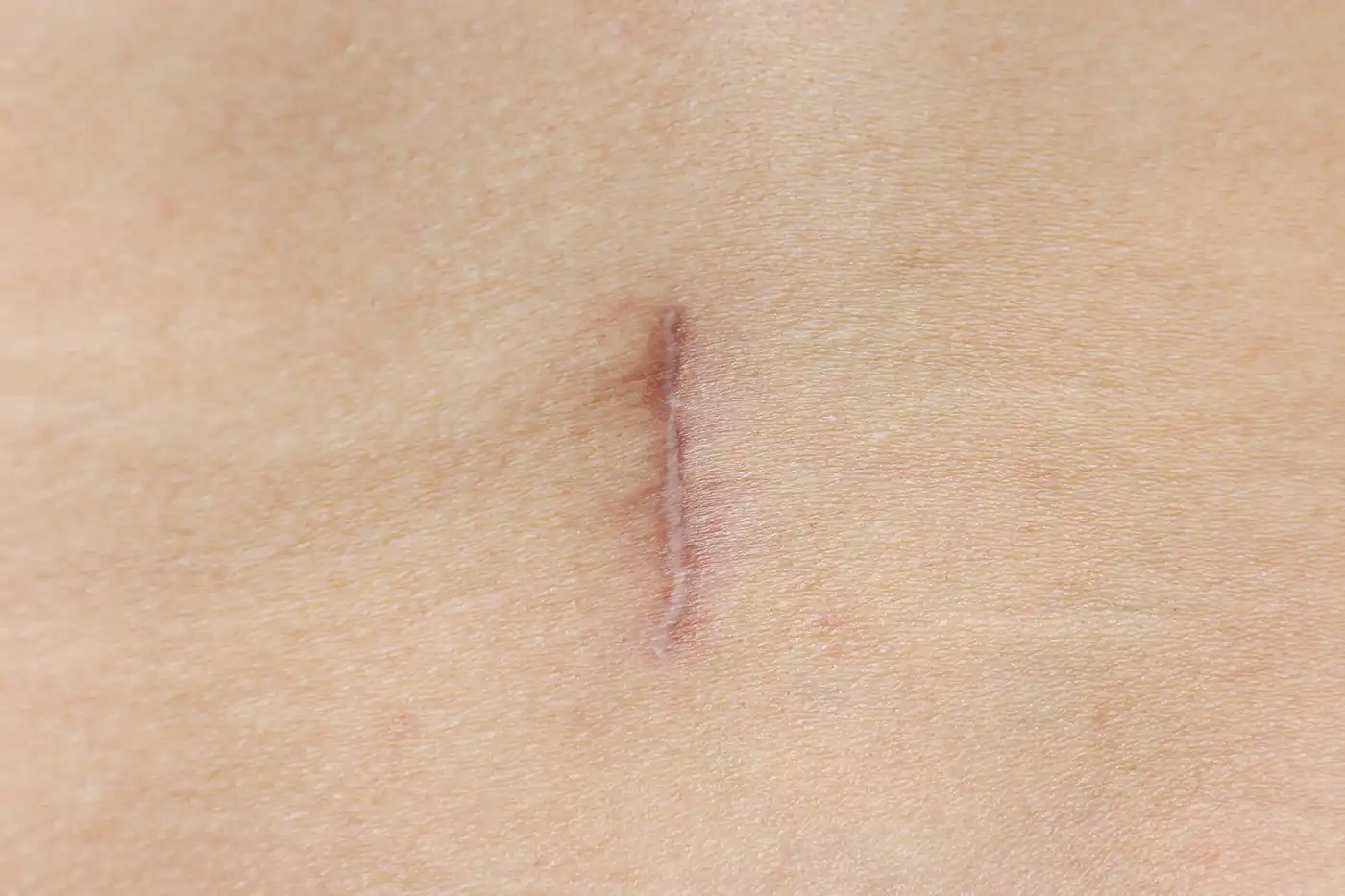
Surgical scars
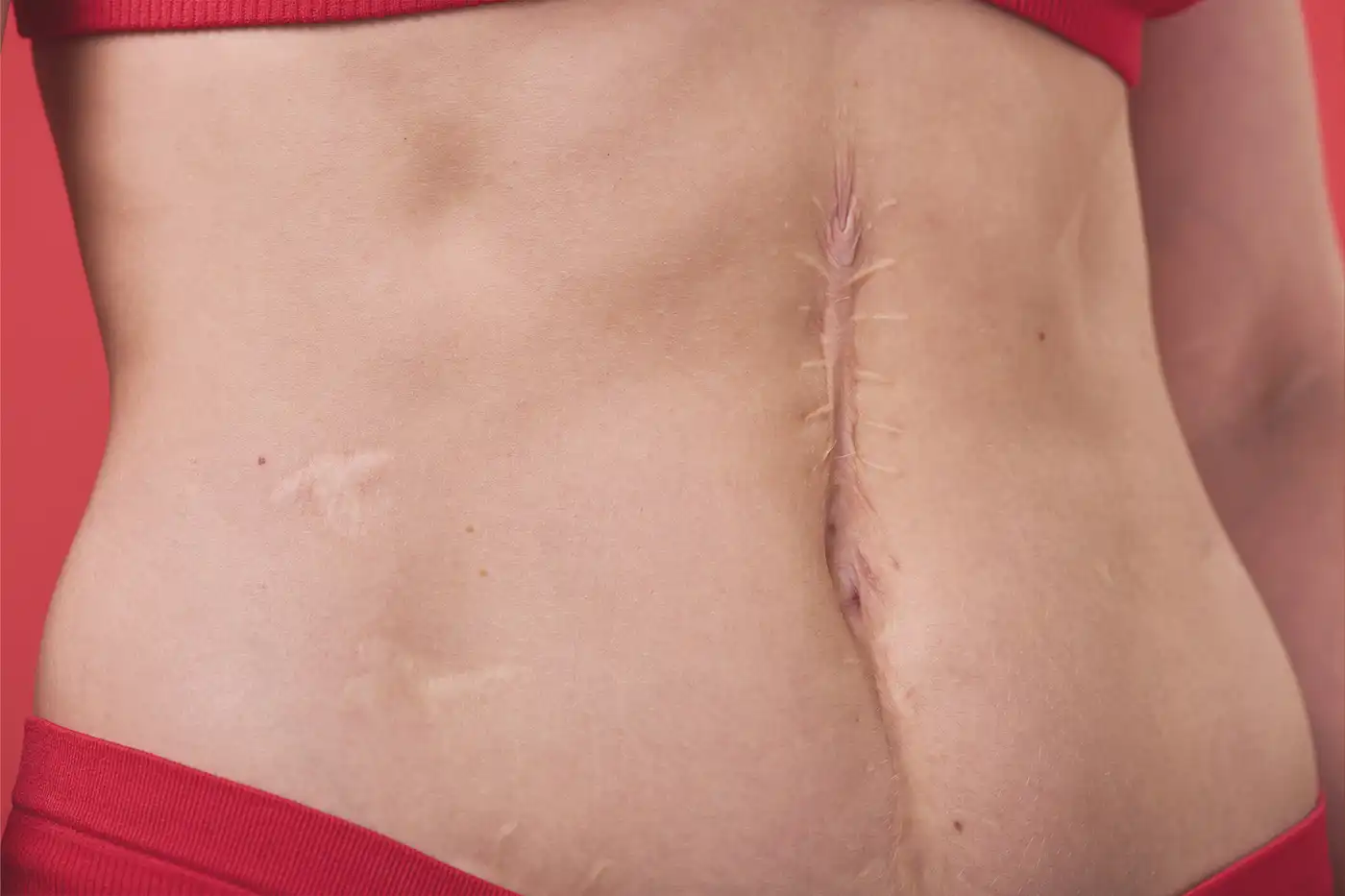
Why treat surgical scars?
Surgical scars can lead to :
- Aesthetic discomfort (redness, irregular relief, pigmentation).
- Psychological impact (lack of self-confidence, avoidance of certain activities).
Scar treatment aims to :
- Reduce redness and inflammation.
- Smoothes skin relief.
- Even skin tone.
- Improve the suppleness and elasticity of the scar zone.
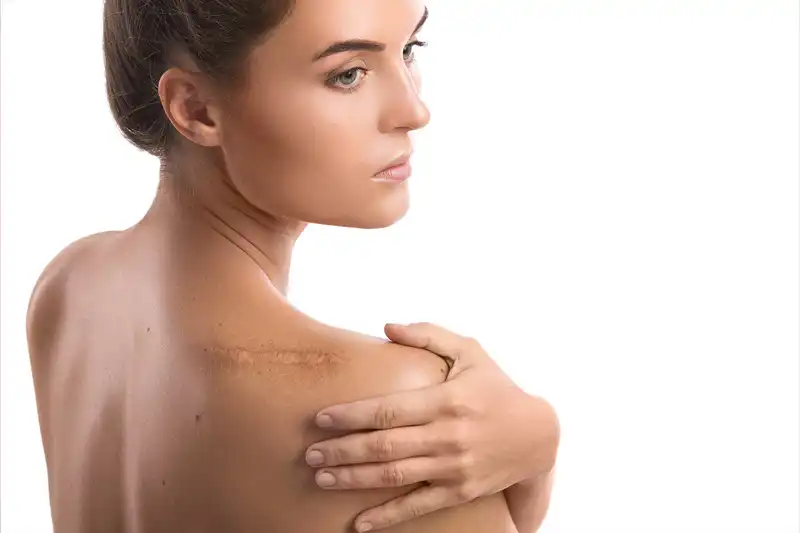
Surgical scar
Lasers: precision tools for skin reshaping
1. Vascular laser
Principle: The vascular laser specifically targets the dilated blood vessels responsible for the redness (erythema) of recent scars or keloids. It emits light that is absorbed by hemoglobin, destroying abnormal vessels without damaging surrounding tissue.
Indications :
- Red or purplish scars (post-operative, burns, acne).
- Recent scars (less than 6 months).
- Keloid or hypertrophic scars.
2. Fractional CO2 laser
Principle: The CO2 laser works by creating micro-perforations in the skin, stimulating the production of collagen and elastin. This technique resurfaces the skin and deeply reduces scars.
Indications :
- Old scars (over 6 months).
- Atrophic (hollow) or hypertrophic (thick) scars.
- Scars with irregular relief.
What to expect after treatment
- Vascular laser: Post-session redness disappears within a few hours to a few days. We recommend avoiding the sun and applying a moisturizing cream.
- CO2 Laser: Skin may be red, crusty and sensitive for up to 10 days. Strict sun protection is essential to avoid pigmentation.
Post-processing tips
- Apply healing and moisturizing treatments.
- Avoid sun exposure (SPF 50+ mandatory).
- Follow the dermatologist’s recommendations to optimize results.
Who can benefit from these treatments?
These techniques are suitable for anyone wishing to improve the appearance of surgical scars, subject to prior consultation with a dermatologist. Certain contraindications exist (tanned skin, history of abnormal scarring, pregnancy, etc.).
My acne treatments:
Conclusion:
Vascular lasers and CO2 lasers are effective and safe solutions for the management of surgical scars.
Their choice depends on the type of scar, its age and the patient’s expectations. A consultation with a specialized dermatologist can establish a personalized protocol for optimal results.